A free guide for clinicians, November 2026

From idea to investment

A practical guide for clinicians who have spotted a problem in their service and need to make the case for fixing it. It covers the structure most NHS organisations expect, how to put together real options, and the financial points that most often catch people out at approval.

A theatre lamp shining on a smiling business case folder and a pound coin

Start with the problem

Most of us know what we would like: another consultant, a new piece of kit, a new pathway. That may well be the right answer, but treat it as something to test rather than the starting point.

Describe what is happening now. Who is affected, how often, and how do you know? A baseline from audit, benchmarking or local data carries much more weight than a sense that things are getting worse.

Agree what you are trying to change. Pick an outcome that can be measured, with a rough idea of how much and by when.

Find out how decisions are made locally. Who approves this kind of proposal, which template they use, and when budgets are set for the year.

Bring people in early. Your clinical lead, operational manager and finance business partner will all have a view. It is better to hear it before you write than after you submit.

The five cases

Most NHS organisations ask for business cases in the Treasury’s Five Case Model. Each case answers a different question, and they work best when you develop them together rather than one after another.

CaseThe questionWhat to include
StrategicWhy does anything need to change?The gap, your evidence (audit, benchmarking, local data), what happens if nothing changes, and measurable objectives.
EconomicWhich option is the best value?A do-minimum and real alternatives, compared on clinical benefit, whole-life cost, feasibility, risk and uncertainty.
CommercialCan we get what we need?Staffing and recruitment, procurement, contracts, estates, suppliers and anything else the plan depends on. More on contracts and procurement.
FinancialCan we afford it?Recurrent and one-off costs, where the money will come from and whether that is confirmed, and how much the figures move if your assumptions are wrong.
ManagementHow will we deliver it, and how will we know it worked?An owner, milestones, the main risks and contingencies, and the measures you will review and when.

How much detail you need depends on the size of the decision. A small local change may need a page or two; a major service development will need much more. Your organisation’s governance rules come first.

Options: avoid the fake three

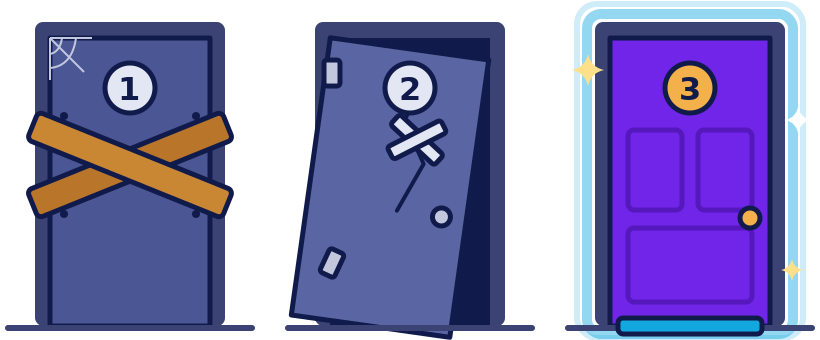
A familiar pattern is to settle on the answer first, then add two weaker options because the template asks for three. Panels notice. A real options appraisal starts with what you need to achieve, then looks at genuinely different ways of getting there.

Three doors: one boarded up, one hanging off its hinge, and one gleaming with a welcome mat

One way to generate options is to vary each of these in turn:

Scope: who or what is coveredSolution: how the need is metImplementation: when and in what stagesDelivery: who provides it, and whereFunding: where the money comes from

Keep a realistic do-minimum

The do-minimum should be something you could actually do, not a straw man. If you rule options out, say why, against requirements you set in advance.

Agree how you will compare them

Decide the criteria before you score: patient benefit, safety, how much of the demand is met, whole-life cost, workforce, implementation risk and affordability. Write down the evidence and assumptions behind each judgement.

Worked example: a perioperative medical service (fictional)
DimensionA: do minimumOption BOption C
ScopeEstimated patients needing review: about 105 a yearWider frail emergency surgical groupAll higher-risk emergency surgical admissions
SolutionClearer referral pathwaysExtend the existing frailty or perioperative teamDedicated general surgery perioperative team
DeliveryExisting staff, structured protocolsACP-led, weekly consultant inputDaily consultant sessions and a dedicated ACP
ImplementationImmediate; no new staffPhased over 6 months, reviewed at 12Full service from day one
Indicative annual costAbout £10kAbout £80kAbout £220k

All figures are fictional teaching assumptions. The costs are estimates of what each option would cost, not sources of funding. When you compare them, look at scope, delivery, implementation, cost and affordability, not just the staffing model.

Download the options worksheet (Word). Page 1 helps you generate options, page 2 helps you compare them and record a recommendation, and page 3 is a completed example.

Demand first, then money

Before you cost anything, work out how much activity the service would actually need to handle.

300
patients a year
×
35%
estimated to benefit
=
105
patients who may need review

This is an estimate of patients needing review. It is not the number of appointments or consultant sessions required, and it is not a payment figure. Illustrative numbers only.

Turn patients into workload

From the number of patients, estimate first reviews, follow-ups, time per contact, the hours you need to cover and the capacity you already have. That gives you a staffing requirement you can defend, which a patient count alone does not.

Then the financial case

A piggy bank swallowing a pound coin
  • Recurrent and one-off costs. The full cost, and when it falls.
  • Confirmed and expected income. Check eligibility, volumes and timing, and whether the income is genuinely new.
  • Capacity and cash. Freeing beds can improve productivity without reducing what the organisation spends.
  • Sensitivity. What happens if recruitment is slow, activity is different, or the benefits take longer? Stress-test it before finance does.

The numbers finance will ask about

You do not need to build the financial model. Your finance partner will do that with you. But a few terms come up in almost every review, and knowing them lets you check your own figures and answer questions in the room.

TermWhat it meansQuestion to ask
Break-even pointThe amount of activity, or the length of time, at which a change has covered its costs.Ask: Break-even on what: patients a year, or time to pay back? Does it rely on income that is confirmed?
Payback periodHow long it takes for savings or income to repay the up-front cost. Easy to explain, but it ignores the timing of money and anything after the payback date.Ask: Does it pay back within the life of the equipment, contract or funding?
Net present value (NPV)The value today of all the future benefits minus all the costs, with money further in the future counted for less. This is called discounting. A positive NPV means the option repays its cost over the period.Ask: Which discount rate and how many years does our template use?
Cash-releasing and non-cash-releasingCash-releasing means spending really falls, for example an agency contract ends. Non-cash-releasing means time, capacity or quality improves but no money comes out, such as freed bed days or clinician time. Both matter, but they are not the same.Ask: Which of my benefits take money out of a budget, and whose budget?
Sensitivity analysisChanging one assumption at a time to see how far the result moves. The switching value is how far an assumption can fall before the option stops paying for itself.Ask: Which assumptions matter most, and what are their switching values?
Stress testChanging several assumptions together, as often happens in practice: late recruitment, lower savings and higher costs in the same year. It shows whether the case survives a bad year.Ask: What happens if the three biggest assumptions all go the wrong way?
Optimism bias and contingencyPeople tend to underestimate costs and time, and overestimate benefits. HM Treasury asks appraisers to adjust for this explicitly, so cases usually add contingency to costs and timelines and reduce the expected benefits.Ask: What contingency is included, and what is it based on?
Ask which discount rate and appraisal period your organisation uses. The Green Book standard discount rate is 3.0% a year, reduced from 3.5% in October 2026, and it no longer has a separate rate for health. Its standard appraisal period is 10 years for most proposals. Local templates may use a different rate or period, so follow your finance team’s guidance.
£52,000
a year to run a new weekly clinic
÷
£130
extra for each patient seen
=
400
patients a year to break even

About 8 patients a week over 50 weeks. The £130 is what each extra patient brings in after the extra cost of seeing them, and it only counts if the income really follows the patient. Check this with finance, because many services are paid in ways that do not rise with activity. Illustrative numbers only.

Worked example: NPV and a stress test (fictional)

A one-off spend of £60,000 is expected to cut £20,000 a year from outsourced or agency costs for five years. The saving is cash-releasing, but only if the spending really stops. Discounted at 3.0%, the savings are worth about £91,600 today, so the NPV is about +£31,600. Simple payback is 3 years (£60,000 ÷ £20,000), or about 3.2 years once discounting is allowed for.

ScenarioNPV, 5 yearsSaving a yearSavings startOne-off cost
Base case+£31,600£20,000Year 1£60,000
Savings 25% lower+£8,700£15,000Year 1£60,000
Savings start a year late+£12,200£20,000Year 2£60,000
Cost 20% higher+£19,600£20,000Year 1£72,000
Savings 25% lower and a year late−£5,900£15,000Year 2£60,000
All three together−£17,900£15,000Year 2£72,000

The switching value is about £13,100 a year: the savings can fall by roughly a third before the NPV reaches zero. Any one problem on its own leaves the case positive. In the fifth row the savings add up to exactly the cost (£15,000 × 4 years = £60,000), so it looks like break-even on paper, yet the NPV is negative because the money arrives later. That is the point of discounting, and of stress testing more than one assumption at once.

All figures are fictional teaching assumptions, rounded to the nearest £100. At the previous 3.5% rate the base-case NPV would be about £30,300. Your finance team will build the real model, including inflation, risk and the right appraisal period.

Getting it approved

Talk to finance early, so they can check your costs, income assumptions and expected benefits while you can still change them. Depending on the proposal, you may also need operational managers, workforce, coding, digital or procurement colleagues. Find out when the annual budget is set and what can be agreed during the year. Before you submit, be clear about who will own delivery and how you will measure whether it worked.

Protect the national standards. Check that your proposal does not make any of the standards your organisation is judged on worse, such as A&E waits, referral to treatment, cancer and diagnostic waits, or the financial plan. If there is a risk, name it and show how you will mitigate it. See the standards for acute, community, mental health and ambulance providers.

A clinician and a finance director talking over coffee

Three things that catch people out

Costed options ≠ appraised options. Putting a price against each option is not a comparison. Show what each one delivers and what could go wrong.

Beds freed ≠ cash saved. Releasing bed days gives you capacity, which is valuable, but it does not reduce spending unless costs actually come out.

Projected income ≠ confirmed funding. Check NHS Payment Scheme prices and income assumptions with finance before you build the case around them.

Contracts and procurement

An approved business case is not permission to buy from a particular supplier. The Commercial Case shows that the staff, suppliers and contracts the plan depends on can realistically be put in place.

Three people at a table, puzzled by question marks and a pound sign

Decide

Define the need, compare the options, check affordability and get the right internal approval.

Secure

Agree the staffing or supplier arrangements, using the right recruitment, procurement or contracting route.

Deliver

Monitor what was promised: outputs, supplier performance, costs, risks and benefits, for the life of the contract.

Two kinds of NHS contract

Healthcare service contracts set out what providers are commissioned to deliver and on what terms. The 2026/27 NHS Standard Contract is used for most NHS-commissioned healthcare outside primary care.

Supplier contracts cover equipment, software, consumables, building work and services bought in from outside. Different rules can apply to how these are bought.

Not every change needs procurement

Recruiting a substantive clinician is mainly a workforce, job-planning and internal funding decision. Buying a diagnostic device or bringing in an external provider may need a formal procurement process.

Either way, list what the plan depends on and who needs to help deliver it.

How procurement works in practice

You define what is needed; the procurement team works out the lawful way to buy it. Involve them before you commit to a product, run a supplier trial or promise anyone a contract.

  1. Describe the clinical need. Set out the outcomes you need, not a preferred brand. Is this a new purchase, a replacement, or a contract that is about to end?
  2. Talk to procurement early. Check existing contracts, your Standing Financial Instructions, the total contract value over its life, and anything already planned.
  3. Choose the route. That might be NHS Supply Chain, a framework, a competition or a permitted direct award. The right route depends on what is being bought, its value and the rules that apply.
  4. Evaluate and award. Clinicians help write the specification and quality criteria and assess products or services. Procurement leads the process and the contract.
  5. Manage the contract. Agree service levels, who does what, how performance is measured, when it is reviewed, and what happens if the supplier does not deliver.
What is a framework, and what is a mini-competition?

A framework sets out terms for future contracts with one or more suppliers. An NHS organisation can award a contract from it using the framework’s own selection rules. Some frameworks allow an award without further competition if set conditions are met; others need a further competition, often called a mini-competition. A supplier being on a framework does not mean you can simply choose them.

Further reading: Cabinet Office guidance on frameworks.

Which procurement rules apply in England?

For most new purchases of goods, works and non-healthcare services, the Procurement Act 2023 has applied since 24 February 2025, with transitional arrangements for older processes. Arranging healthcare services in England generally falls under the Provider Selection Regime instead. Which rules apply depends on what is being bought and when the process started. Your Standing Financial Instructions and delegated limits also apply.

Official sources: Cabinet Office guidance · NHS England: Provider Selection Regime.

Why whole-life cost matters more than purchase price

Compare what each option costs over its working life: purchase or lease, installation, consumables, licences, training, servicing, support, energy, downtime and eventual replacement. Then weigh clinical benefit, patient experience, staff time and risk. A cheaper purchase can cost more to run, and a higher price up front can be better value overall.

Further reading: NHS Supply Chain: value-based procurement.

Before you submit the Commercial Case, check

  • Who has confirmed that the staffing or supplier route is workable?
  • Is there an existing contract, framework or supplier we should use?
  • Have we costed the whole life of the proposal and thought about supplier or delivery risk?
  • Who will manage performance, contract changes and benefits once it is running?

A practical introduction, not procurement or legal advice. Ask your procurement and finance teams, and note that older contracts may follow different rules. Adapted from my talk “Introduction to Procurement in the NHS”. Rules and links last checked November 2026.

Real NHS business cases

These are published documents from NHS organisations, chosen because each shows something useful. They are for learning, not ranking, and the larger ones are not templates for a small departmental proposal.

A clipboard with ticked items and a pencil

Digital service · Business case · 2025

Digital image handling

Central London Community Healthcare NHS Trust

What it shows. A practical proposal built on current activity and staff feedback, with alternatives to the existing product, a benefits framework and a planned re-procurement. Useful for digital, diagnostic and community services.

Read the redacted business case (PDF)

Published by the Trust in a 2026 Freedom of Information response. Source and supporting templates.

Clinical service · Decision-making business case · 2019

Urgent stroke services in Kent and Medway

Kent and Medway Clinical Commissioning Groups (Joint Committee)

What it shows. How a clinical case for change becomes a decision: a clinical vision, a long list narrowed to a shortlist, public consultation, a preferred option, then the workforce, estates, financial and implementation consequences. A good look at options appraisal and engagement at scale.

Read the decision-making business case (PDF)

A long committee paper from commissioners, not a single trust’s investment case, and it does not use the five-case headings. Figures reflect 2019.

Departmental service · Business case · 2017

Endoscopy service

Shrewsbury and Telford Hospital NHS Trust

What it shows. A single-department case built on demand and capacity modelling. It compares doing nothing, continuing premium-cost insourcing and expanding the substantive workforce, scored against 14 outcomes, with sensitivity analysis, risks and a post-implementation review. Its figures were revised after committee scrutiny, which is instructive in itself.

Read the Trust Board paper and business case (PDF)

A 2017 Board paper with appendices. It does not use the five-case headings, and one appendix names individual clinicians’ job plans, so learn from the structure rather than the details.

Hospital strategy · Strategic outline case · 2019

Future hospital services

Calderdale and Huddersfield NHS Foundation Trust

What it shows. A clearly documented strategic case and options process linking patient pathways, workforce, travel times, bed capacity and capital needs. Useful for seeing how objectives and engagement shape the shortlist.

Read the Strategic Outline Case

Figures, policy references and approval arrangements reflect 2019.

Community hospital · Full business case · 2021

New community hospital, Cinderford

Gloucestershire Health and Care NHS Foundation Trust

What it shows. A complete five-case Full Business Case at moderate capital scale (£23.9m). It carries site options forward from the outline stage, compares the preferred option with business as usual, and applies the NHS service change tests to bed closures. Explainers from the pandemic, such as single en-suite rooms, shape the clinical argument.

Read the Full Business Case (PDF)

About 100 pages plus appendices: start with the Strategic Case and the options. Figures reflect mid-2021.

When you read these, look at how each one sets out the problem, defines success, compares options, explains affordability and plans delivery. The notes above are my own commentary, not the views of the organisations that published them, and linking to them does not imply their endorsement.

Downloads and further reading

The guide and worksheet are free to use and adapt. The links below go to the original publishers.

The Green Book and HM Treasury’s business case guidance go into far more detail than most local clinical proposals need. Use them as the reference, scaled to your decision and alongside your organisation’s own rules.

Ak Maheswaran, clinical.finance, November 2026.

Written for education. Check your own organisation’s guidance and current NHS payment rules before relying on it. Not endorsed by NHS England or One NHS Finance.